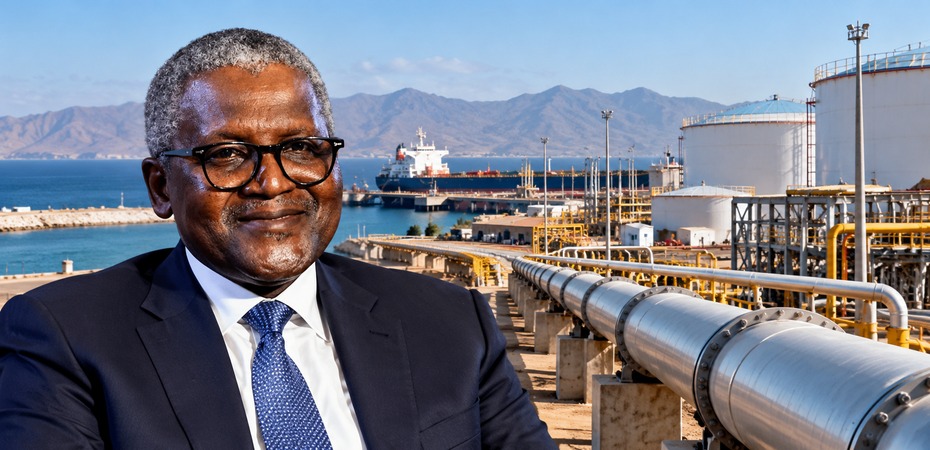
Dangote Supports Major Fuel Infrastructure Project in East Africa
A proposed fuel pipeline connecting Ethiopia and Djibouti is set to become a significant infrastructure investment in the Horn of Africa. Nigerian industrialist Aliko Dangote is helping finance the estimated $660 million project, which aims to improve the movement of petroleum products between Djibouti’s port facilities and Ethiopia’s domestic distribution network.
The development could reduce transportation delays, strengthen fuel availability and support businesses that depend on reliable energy supplies. It also represents another step in Dangote’s efforts to expand his business interests beyond Nigeria.
A New Route for Ethiopia’s Fuel Supplies
The planned pipeline will extend approximately 120 kilometres from the Damerjog port area in Djibouti to a distribution facility at Dewele in Ethiopia. The project is also expected to include storage infrastructure capable of holding around 400 million litres of fuel.
According to the project details reported by BBC News, operations are expected to begin within 18 months of the announcement.
Ethiopian Prime Minister Abiy Ahmed said the new connection could substantially shorten the time required to move fuel towards Addis Ababa. Journeys that currently take several days could potentially be completed in around one day, improving the efficiency of the country’s fuel supply chain.
The initial phase is expected to handle petrol, diesel and aviation fuel. These products are essential to road transport, air travel, industrial activity and other parts of Ethiopia’s economy.
Why the Ethiopia–Djibouti Connection Matters
Ethiopia’s landlocked geography makes access to neighbouring countries’ ports particularly important for international trade. Djibouti serves as a major gateway for goods entering Ethiopia, including petroleum products.
Fuel transported through existing logistics networks must travel inland before reaching businesses and consumers. A dedicated pipeline could reduce reliance on road-based transportation for a substantial portion of these deliveries.
More efficient fuel distribution could benefit transport operators, airlines, agricultural businesses and construction companies. Greater storage capacity could also help improve the management of supply fluctuations, although the project’s eventual impact will depend on its completion, operating costs and performance.
Djibouti could gain from additional port-related activity, employment opportunities and government revenue generated by the expanded infrastructure.
Dangote’s Expanding Energy and Industrial Interests
The pipeline project forms part of a broader expansion strategy associated with Dangote, whose business empire includes cement manufacturing and petroleum refining.
Dangote Cement has an annual production capacity of approximately 55 million tonnes, according to the figures cited in the original report. Its operations contribute to construction and industrial supply chains across several African markets.
His Nigerian oil refinery is another major component of the group’s activities. The facility has a reported processing capacity of 700,000 barrels of crude oil per day, with plans to increase this to 1.4 million barrels per day.
The refinery’s expansion ambitions underline Dangote’s broader interest in strengthening Africa’s industrial and energy infrastructure.
The BBC report also noted that the refinery had listed 4.1 billion ordinary shares on the Nigerian stock exchange, with the move intended to raise approximately $1.63 billion.
Further Refinery Investment Planned in Kenya
Dangote’s infrastructure ambitions also extend to East Africa through a proposed refinery in Lamu, Kenya.
According to the report, the company was preparing to begin groundwork for a planned facility with a proposed capacity of 700,000 barrels of crude oil per day.
The development would represent another major energy investment in the region. However, the proposed refinery and the Ethiopia–Djibouti pipeline are separate projects, each with its own construction requirements, financing arrangements and operational considerations.
Together, these plans illustrate the growing interest of major African investors in energy production, transportation and industrial infrastructure across national borders.
Potential Benefits and Challenges Ahead
The pipeline could improve the movement of petroleum products and reduce some of the logistical difficulties associated with supplying a large, landlocked economy.
Businesses may benefit from more predictable deliveries, while improved distribution infrastructure could support economic activity across multiple sectors. Djibouti may also strengthen its position as an important regional trade and logistics centre.
However, the project’s benefits will depend on successful construction, effective maintenance, adequate financing and the development of reliable distribution arrangements. The stated completion timeline is an expectation rather than confirmation that operations will begin on schedule.
The long-term economic impact will become clearer once the infrastructure is operational and its effect on fuel transportation costs, delivery times and supply reliability can be assessed.
A Significant Step for Regional Infrastructure
Dangote’s involvement in the Ethiopia–Djibouti pipeline highlights the role that private investment can play in developing infrastructure across African economies.
For Ethiopia, the project offers the prospect of a more direct and efficient route for essential fuel supplies. For Djibouti, it could create additional opportunities connected to port operations and regional trade.
More broadly, the investment reflects an effort to develop infrastructure that connects African markets and supports industrial growth. Whether the project delivers its anticipated benefits will depend on implementation, but its planned scale makes it an important development to watch in East Africa’s energy sector.
Source: This article is based on reporting by BBC News about Aliko Dangote’s investment in the proposed Ethiopia–Djibouti fuel pipeline. Add the link to the original BBC report before publication.