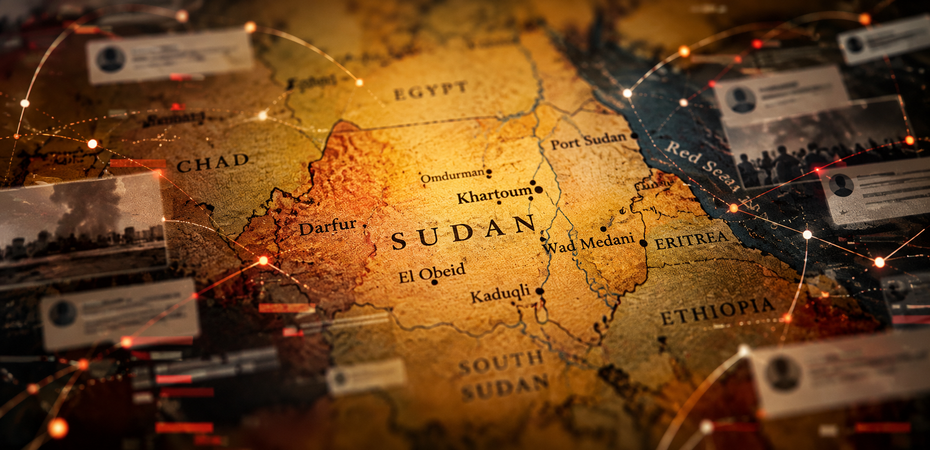
Sudan’s Digital Propaganda War: How Social Media Shapes the Conflict
The conflict in Sudan is being fought not only on the ground but also across digital platforms, where competing political narratives and unverified reports shape public understanding of events. Limited access for journalists and a shortage of independent field reporting make it difficult to establish the accuracy of many claims. Consequently, misleading information can spread rapidly, leaving audiences struggling to distinguish credible reporting from propaganda.
The Sudanese Armed Forces (SAF) and the Rapid Support Forces (RSF) both seek to influence how the conflict is perceived. Their supporters use various online strategies, including selective reporting, censorship, disinformation, and coordinated messaging. Yet, neither side has complete control over the digital conversation. Politicians, military commentators, influencers, livestreamers, YouTubers, and ordinary social media users all contribute to the increasingly complex information landscape.
Social Media as a Battlefield for Competing Narratives
Facebook and X have become important spaces for political discussion among Sudanese audiences. Livestreamers and YouTubers also contribute by sharing developments, interpreting events, and presenting viewpoints to large online communities. Although these platforms can make information more accessible, they can also enable unverified claims to reach audiences before their accuracy has been established.
The digital debate includes supporters of both the SAF and RSF, as well as anti-war voices associated with the former civilian coalition, the Forces of Freedom and Change (FFC). These groups have different objectives and levels of influence, but their online activity contributes to the competing interpretations of Sudan’s ongoing conflict.
Who Drives Sudan’s Online Propaganda Campaigns?
The people spreading political narratives online do not necessarily share the same motivations. Some participate because of genuine political or military sympathies, while others may be driven by financial rewards, political interests, personal disputes, or less visible agendas. This mixture of motivations makes it difficult to distinguish independent commentary from organised messaging and deliberate attempts to manipulate public opinion.
Influential content creators can give particular claims widespread attention, sometimes before independent verification takes place. Repeated exposure to emotionally charged messages may strengthen existing biases, deepen social divisions, and make it harder for audiences to evaluate events objectively.
Political and Humanitarian Consequences
The effects of online propaganda extend beyond social media discussions. Misleading claims and polarising narratives can undermine trust between communities, intensify political divisions, and weaken Sudan’s national cohesion. They may also complicate humanitarian communication when people cannot easily identify reliable updates about events and conditions affecting communities.
As competing narratives continue to circulate, opportunities for constructive dialogue, peacebuilding, and political resolution may become more difficult to pursue. Understanding how information is created, distributed, and interpreted is therefore essential to understanding the broader consequences of the conflict.
Why Reliable Information Matters
Reducing the impact of misinformation requires access to credible journalism, independent fact-checking, and greater public awareness of how digital information spreads. Readers can make more informed decisions by checking original sources, comparing reports from multiple reputable outlets, reviewing publication dates, and approaching sensational or emotionally charged claims with caution.
Sudan’s digital propaganda struggle illustrates how online communication can influence public opinion during periods of conflict. Examining the actors involved, the methods they use, and the consequences of their messaging provides valuable insight into how misinformation can deepen divisions. Reliable reporting and informed media consumption remain important for humanitarian awareness, public understanding, and future peacebuilding efforts.